Anxiety • 2019 • episode "S1E3" The Mind, Explained

Category: Brain | Download:

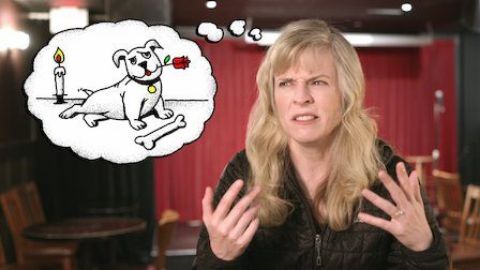
Feeling anxious? You're not alone. Stand-up comedian Maria Bamford shares her personal experience with OCD in this examination of anxiety disorders.

Make a donation

Buy a brother a hot coffee? Or a cold beer?

Hope you're finding these documentaries fascinating and eye-opening. It's just me, working hard behind the scenes to bring you this enriching content.

Running and maintaining a website like this takes time and resources. That's why I'm reaching out to you. If you appreciate what I do and would like to support my efforts, would you consider "buying me a coffee"?

Donation addresses

Buy Me a Coffee at ko-fi.com

patreon.com

BTC: bc1q8ldskxh4x9qnddhcrgcun8rtvddeldm2a07r2v

ETH: 0x5CCAAA1afc5c5D814129d99277dDb5A979672116

With your donation through , you can show your appreciation and help me keep this project going. Every contribution, no matter how small, makes a significant impact. It goes directly towards covering server costs.
The Mind, Explained • 2019 • 4 episodes •

Memory

How does remembering work? Delve into the way the brain stores, processes and retrieves memories -- and why certain ones sometimes prove unreliable.

2019 • Brain

Dreams

Why do we dream? When the lights go out, interesting things happen in the brain and body. What’s the significance of dreams, and what can they teach us?

2019 • Brain

Anxiety

Feeling anxious? You're not alone. Stand-up comedian Maria Bamford shares her personal experience with OCD in this examination of anxiety disorders.

2019 • Brain

Mindfulness

Take a deep, cleansing breath and slowly exhale while being enlightened on the impact meditation can have on your mind and body.

2019 • Brain

You might also like

Origins

Why do we hate? Humans are capable of love and cooperation --so why do we treat each other with cruelty and violence? Evolutionary anthropologist Brian Hare searches for the origins of hate in our distant past, and in our contemporary environment.

S1E1Why We Hate • 2019 • Brain

Turning Point

Alzheimer's disease -- the most feared of all maladies, with no way to cure, stop or even slow its insidious progression. But now, after decades of perseverance in the lab, researchers are on the cusp of a scientific breakthrough that could be the first step toward making Alzheimer's itself a distant memory. In the gripping new documentary Turning Point, acclaimed filmmaker James Keach takes us inside the quest for the first medication that that could treat the underlying process of Alzheimer's disease, more than a century after Dr. Alois Alzheimer first described the brain disorder that slowly destroys memory and cognitive skills. Along the way, we meet the people behind these grand experiments, the scientists driven as much by personal conviction as professional innovation. And we discover why medical science is never easy, often unpredictable and potentially perilous.

2020 • Brain

The Stilwell Brain

There are 100 billion individual neurons in the human brain. Working together, they allow us to make sense of, and move through, the world around us. Scientists have built replicas of the human brain with computers, but no one has ever successfully made a brain out of humans. On this episode, I’ll travel back to my hometown of Stilwell, Kansas, and turn it into a working brain!

S3E3Mind Field • 2018 • Brain

Brains

In the final episode Dr Alice Roberts explores how our species, homo sapiens, developed our large brain; and asks why we are the only one of our kind left on the planet today?

S1E3Origins of UsBrain

The Placebo Experiment

Could the power of fake pills be used to treat some of our most common medical complaints? To find out, Dr Michael Mosley embarks on Britain's largest ever trial to investigate the placebo effect. He is heading to Blackpool to gather 117 people suffering from backache - one of the leading types of chronic pain - before trying to treat them with nothing but fake pills and the power of the mind. Working with experts from the University of Oxford, Michael discovers that the placebo effect is more than just a medical curiosity. The brain is actually capable of producing its own drugs, and these can be more powerful than prescription painkillers. Michael's volunteers come from all walks of life, but they have all suffered with bad backs for years and feel their conventional medication isn't up to the job. They include Stacey, who is struggling to keep up with her two energetic daughters, wheelchair user Jim, who longs to be able to get back on a boat, and poker player Moyra, who is looking for a painkiller which doesn't affect her performance. They think they are taking part in the trial of a powerful new painkiller, but their blue and white capsules actually contain nothing but ground-up rice. Can this fake treatment make a real difference? And how will the volunteers react when Michael reveals the truth? Michael also finds out about some remarkable placebo experiments from around the world, including a woman in Oxfordshire who experienced a near-miraculous recovery after undergoing fake surgery to fix her chronic shoulder pain. Plus a team in Lancashire who want to see if the placebo effect can cure a broken heart. And Michael discovers a team in Germany working on a placebo that works even if you know you are taking it, which might improve the lives of transplant patients. Michael also tests this out on himself - attempting to train his own body to respond to a fake treatment - a foul-tasting green drink - as if he were taking actual drugs.

Horizon • 2018 • Brain

The Psychedelic Drug Trial

The Psychedelic Drug Trial has exclusive access to a ground-breaking new trial at Imperial College London. The trial sees, for the first time ever under controlled conditions, a psychedelic drug tested head-to-head against a standard antidepressant as a treatment for depression. The film follows a pioneering team of scientists and psychotherapists, led by Professor David Nutt, Dr Robin Carhart-Harris and Dr Rosalind Watts, as they compare the effects of psilocybin (the active ingredient of magic mushrooms) with an antidepressant (an SSRI called escitalopram) on a small group of participants with clinical depression. This is scientific research at its most cutting edge. With over seven million people being prescribed antidepressants each year in England alone, this drug trial is an important milestone in understanding a completely different treatment for depression.

2021 • Brain