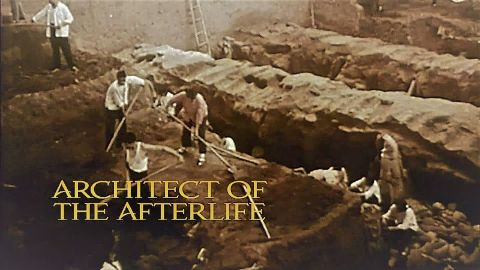
Enter the royal tomb of the first emperor and witness the incredible terracota warriors who guard it
Hope you're finding these documentaries fascinating and eye-opening. It's just me, working hard behind the scenes to bring you this enriching content.
Running and maintaining a website like this takes time and resources. That's why I'm reaching out to you. If you appreciate what I do and would like to support my efforts, would you consider "buying me a coffee"?
BTC: bc1q8ldskxh4x9qnddhcrgcun8rtvddeldm2a07r2v
ETH: 0x5CCAAA1afc5c5D814129d99277dDb5A979672116
With your donation through , you can show your appreciation and help me keep this project going. Every contribution, no matter how small, makes a significant impact. It goes directly towards covering server costs.

Was he an incompetent ruler, a brutal tyrant, or a great leader? 2,000 years after his death, the legacy of China's first emperor, Qin Shi Huang, remains a point of debate. His role in ending centuries of conflict between warring factions and creating China's first imperial dynasty is indisputable, yet he has questionably been portrayed as a violent oppressor. Through ancient texts, artifacts, and expert insights, revisit the life of this complicated and influential figure.
2019 • History
Enter the royal tomb of the first emperor and witness the incredible terracota warriors who guard it
2019 • History
Hendrik Poinar is a bit of a mystery man – as in, he likes to solve them. And he’s part time traveller – as in, he likes to dig up the past. Think Doctor Who meets Indiana Jones. Poinar is an evolutionary biologist - which means he studies the nature of how we humans got here and where we’re going. He happily admits his childhood dream was to travel the world and travel back in time. “No-one imagines that there’s actually something still hidden within a bone that’s been buried for a few thousand years or 100,000 years, let alone the possibility of resurrecting it or bringing it back to life,” says Poinar. “I mean, that’s sort of completely bizarre. It’s like a time machine, yeah, it’s a kid’s dream.” Secrets in the Bones follows Poinar on an epic journey to Italy, Germany, Britain, and across the Unites States. His mission: solve one of the greatest mysteries of science, a mystery that has eluded researchers for more than six centuries: unlock the secrets of the fourteenth century killer disease that caused the Black Death and wiped out more than 50 million people.
S53E12 • The Nature of Things • 2014 • History
A disease that developed and killed within a few days decimates Europe and changes the course of history.
S2E6 • Butterfly Effect • 2017 • History
Humans have depended on fire for millennia, but do we fully understand the impact it has had on our diet? When our hunter-gatherer ancestors learned to harness this tool, it ignited a culinary and cerebral revolution believed to be one of the most important factors in our evolution.
S1E1 • The History of Food • 2018 • History
The battle between the French and English for the French territory of New France hinges on the presence of the British navy. And the Battle on the Plains of Abraham is tipped to Great Britain by the solidly trained soldiers of the British army. This changed the landscape of North America.
S2E3 • Butterfly Effect • 2018 • History
66 million years ago a seven-mile-wide asteroid collided with Earth, triggering a chain of events suspected of ending the dinosaurs' reign. But experts have long debated exactly what happened when the asteroid struck and how the giant beasts met their end. Now, scientists have uncovered compelling new clues about the catastrophe - from New Jersey to the wilds of Patagonia, and an international expedition of scientists has drilled into the impact crater off the coast of Mexico, recovering crucial direct evidence of the searing energy and giant tsunami unleashed by the asteroid. Join NOVA as scientists piece together a chillingly precise unfolding of the Earth's biggest cataclysm, moment by moment. And discover how our early mammalian ancestors managed to survive and repopulate the Earth.
1944: The Soviets continue on the path towards liberation. On the road to Berlin, they discover the horror of Hitler's extermination camps. Stalin's people have sacrificed the most: 9 million soldiers dead and 20 million civilians killed. Has he become Master of the World?
S1E3 • Apocalypse Stalin • 2015 • History