According to current estimates, a widely available COVID-19 vaccine will likely be available within the next 12 months. Why so long? Learn how vaccines are developed and explore the current state of the coronavirus landscape, guided by the scientists on the ground trying to find a solution.
Hope you're finding these documentaries fascinating and eye-opening. It's just me, working hard behind the scenes to bring you this enriching content.
Running and maintaining a website like this takes time and resources. That's why I'm reaching out to you. If you appreciate what I do and would like to support my efforts, would you consider "buying me a coffee"?
BTC: bc1q8ldskxh4x9qnddhcrgcun8rtvddeldm2a07r2v
ETH: 0x5CCAAA1afc5c5D814129d99277dDb5A979672116
With your donation through , you can show your appreciation and help me keep this project going. Every contribution, no matter how small, makes a significant impact. It goes directly towards covering server costs.
The Mars InSight lander is on a 6-month journey to the Red Planet, with hopes of uncovering some of our planetary neighbor's secrets. Digging deep into Martian soil, the lander will measure marsquakes and also study the deep interior of Mars - perhaps revealing the origins of the planet.
2018 • Astronomy
MOSE is one of the world?s largest and highest-profile civil-engineering works. But will it be able to save Venice? Venice has grappled with inundation for centuries. But due to natural subsidence and higher tides caused by global warming, the city is more vulnerable to flooding than ever before.
2019 • Technology
The New Horizons spacecraft revolutionized our understanding of the solar system as it rocketed past Pluto. Now, four billion miles since its launch, the craft approaches its next target: Ultima Thule.
2019 • Astronomy
The Hayabusa2 spacecraft has just completed one of the most intricate procedures in space exploration. The first mission to deliver rovers onto an asteroid has now descended to its surface for a sample, before returning back to Earth in 2020.
2019 • Astronomy
How long does it take for life to rebound after a major mass extinction? Scientists in Svalbard dig through fossil clues for surprising revelations about our Earth's history.
2019 • Environment
For the first time, scientists have captured a photograph of a black hole. The image verifies one of the most important theories in physics and will help unlock the greatest mysteries of the cosmos.
2019 • Astronomy
Great white sharks are one of the most feared predators on Earth, and yet we know very little about them. Science is now revealing the mysteries of this perfect predator through evolutionary biology.
2019 • Nature
A non-profit organization established in 2011 is aiming to land the first Israeli spacecraft on the Moon. This is the story of their attempt and the excitement of being the first private company to have a spacecraft launched with the intention of going to and landing on the moon.
2019 • Astronomy
The Tyrannosaurus Rex is known as the king of the dinosaurs, but how did its reign begin? Meet Moros Intrepidus, a 180 lb., deer-sized ancestor to the T-Rex. Learn how the latest in paleontology can now link this small dinosaur to the 19,000-pound Scotty, the largest T-Rex ever discovered.
2019 • Nature
Heart disease is the number one cause of deaths worldwide, but there are researchers frantically working to change that. Meet the people inventing the future of cardiac health, from new ways of imaging the body, to the possibility of 3D printing a functioning heart.
2019 • Health
66 million years ago, an asteroid slammed into Mexico’s Yucata´n Peninsula, causing a dinosaur mass extinction. With over 700,000 asteroids in space, what's in store for humanity and our planet if it happens again?
2019 • Astronomy
The real impact of global warming is now being felt in communities around the world. Climate scientists explain what to expect where you live, and what steps might still be taken to reverse the climate crisis.
2019 • Environment
Rip currents can appear without warning, turning an ideal beach outing into a horrific scene of chaos and panic. But groundbreaking new research could teach thousands of potential victims how to spot and escape these silent killers before it's too late.
2019 • Environment
The eruption of Mount Vesuvius is renowned for its decimation of Pompeii, but nearby, an equally impressive Roman settlement known as Herculaneum was lost to history. Today, the latest in technology is opening a wind to the past, as scientists digitally "unravel" the Herculaneum Scrolls.
2019 • History
Lions may be known as the kings of the jungle, but it was saber-tooth cats that ruled over the Americas. New fossil evidence is shinning a light on the violent lives of these mysterious species.
2019 • Nature
For all of human history, the Sun, our home star, has measured our days and our seasons while fueling all life on Earth. Yet it remains an enigma. NASA's Parker Probe Plus is on a mission to change that -- flying through dangerous radiation to become the closest spaceship to orbit our Sun.
2019 • Astronomy
The Greenland ice sheet, the last remnant of the Ice Age, is melting at an unprecedented rate. Today, scientists and researchers from all over the world are paying close attention to what could become a global catastrophe.
2019 • Environment
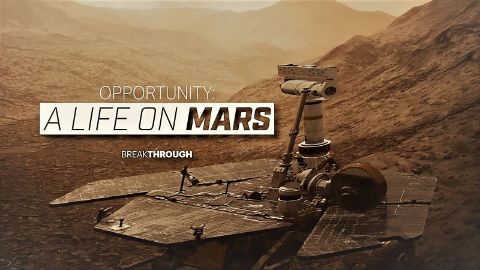
This year we said goodbye to one of our most intrepid planetary explorers, the Opportunity rover. Take a look back at its storied 15-year mission on Mars, and how it revolutionized our understanding of not just the red planet, but our solar system at large.
2019 • Astronomy
The coronavirus disease is spreading at frightening speeds from Wuhan, China, to the rest of the world. How did this virus develop, and how close are we to finding an effective vaccine?
2020 • Health
Is it possible that there is a hidden planet within our own solar system? New evidence suggests that the fabled Planet X, or Planet 9, may indeed exist… but where? Meet the teams racing to discover and redefine our planetary neighborhood.
2020 • Astronomy
Officially designated as a pandemic, it seems as if COVID-19 has taken over the world. Lucky for us, this isn’t the first time we’ve had to deal with a serious virus outbreak. Experts share the methods currently in place to slow down this infectious disease.
2020 • Health
According to current estimates, a widely available COVID-19 vaccine will likely be available within the next 12 months. Why so long? Learn how vaccines are developed and explore the current state of the coronavirus landscape, guided by the scientists on the ground trying to find a solution.
2020 • Health
Meet Perseverance, NASA's latest rover, as it heads to Mars to answer one question: did life exist on the red planet? On the way, it will lay the foundation for human exploration of our closest neighbour.
2020 • Astronomy
Mars Perseverance Rover is in its final cruise stages preparing for its historic Feb 18 landing on the red planet. We take you inside the harrowing landing, the science mission, and cutting edge technology, including the first-ever Martian helicopter.
2021 • Astronomy
This is the epic story of the James Webb Space Telescope, told first-hand by the scientists who developed it. Building the largest, most advanced, and most expensive telescope ever made does not come without its challenges. But seeing further into space than ever before will be worth the struggle.
2021 • Astronomy
For the first time in decades, NASA is sending two new missions to Venus designed to study and explore the planet’s atmosphere and earth-like composition. Together, DAVINCI and VERITAS will provide a new, 360? view of Venus -- its history, and perhaps a window into Earth’s past as well.
2021 • Astronomy
The ICARUS system monitors the movements and behaviours of Earth’s creatures from space. An antenna mounted on the International Space Station receives data from tiny trackers attached to animals and birds, opening the door to new discoveries that can warn us of natural disasters and outbreaks.
2021 • Astronomy
Drones have already conquered Earth, and now they're heading out into the solar system. The Mars Helicopter, Ingenuity is proving to be successful and will pave the way for Dragonfly, a future daring mission to Titan.
2021 • Astronomy
Meet Perseverance, NASA's latest rover, as it heads to Mars to answer one question: did life exist on the red planet? On the way, it will lay the foundation for human exploration of our closest neighbour.
2021 • Astronomy
Watch as the Mars Perseverance Rover makes its historic landing on the Red Planet. We take you inside the harrowing February 18, 2021 landing, the science mission, and cutting-edge technology, including the first-ever Martian helicopter.
2021 • Astronomy
The latest developments in space technology continue to reveal the wonders of our solar system. With new moons recently spotted orbiting Saturn, the gas giant has taken the lead in our The Gas Giant has taken the lead in our cosmic neighbourhoods Moon Count
2021 • Astronomy
In recent years, eating has become a health hazard. We love our potato chips, candy, and fast food…however bad they are for our health. And we still continue to consume these products in ever greater quantities. After the war on tobacco, a new battle is underway: the fight for healthier food. So, why do we consume so much processed food and why are we so hooked on it? How exactly does the relentless agribusiness keep us coming back for more? How does it mold our tastes, influence our cravings and feed our addictions? The few independent researchers who dare raise concerns about processed food are often ignored. Opposite them, the giant multinationals who fund the majority of research into nutrition are highly organized, and present at every level of decision-making. They are even involved in government campaigns on nutrition and health. Remi, our French-American reporter, will investigate current eating habits in Europe and America, and meet those involved in this new global food war. We will hear from scientists tracking sugar addiction, the businessmen playing on our weaknesses, legal experts preparing to challenge the might of the industry, and simple lovers of good food. A compelling documentary that reveals the latest ways the agribusiness is trying to tempt us, and the ways we as consumers can try to resist.
2013 • Health
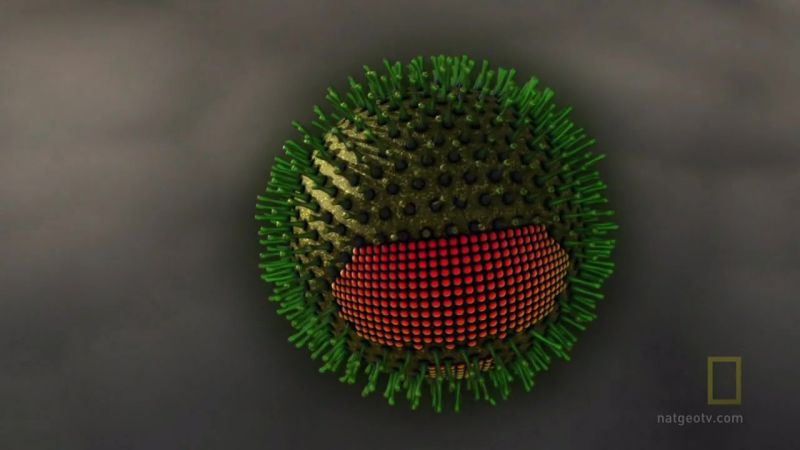
On the front lines of the hunt for killer viruses, a shocking discovery is made: viruses, once thought to be a menace to humankind, may in fact be the ultimate creators. Since the beginning of time, they have played a critical role in evolution, shaping us and perhaps even creating us. How could that be? How can an entity seemingly programmed for destruction lead to genetic diversity and new species? To many people, viruses are simply agents for disease, but to Dr. Luis Villarreal, Director of the Center for Virus Research at the University of California Irvine, they may possess far greater power than originally thought. He guides us through evidence that viruses gave rise to the first complex cells, played a role in the diversification of life, changed how our young are born, drove evolution, and perhaps gave us emotions. One expert even suggests that an ancient virus could have entered our genes and rewired us for monogamy. National Geographic investigates a provocative new theory that suggests that all life - including humans - is descended from viruses. Taking us through African jungles in search for new strains, this episode of Explorer presents a startling new view of viruses - toward what may be a remarkable evolutionary moment: the rise of a new human species.
2008 • Health
The Ebola virus. No-one knows exactly where it comes from but one thing is certain - it's one of the most virulent infections known to science. This special episode of Horizon meets the scientists and doctors from all around the world looking for the cure and hears first-hand accounts of what it's actually like to catch - and survive - this terrible disease.
Julia Bradbury talks about her battle with the disease, filmed from the very early days of her diagnosis as she comes to terms with the news, and prepares for a mastectomy. The documentary features Julia's immediate family including her three children, her parents - both of whom are cancer survivors - and her older sister Gina, who are all impacted by Julia's diagnosis and intrinsic to her efforts to recover.
2022 • Health
COVID-19 is far from the first pandemic to wreak havoc in the world. A long line of infectious diseases have devastated and in some cases destroyed entire societies. Almost all of them started in animals and made the jump to humans. We are terrified of pandemics. And with good reason. Infectious diseases have cost the lives of countless people over the centuries, devastating families, towns, and even societies. The Black Death spread across Europe and Asia in the 14th century leaving millions dead in its wake. Between the 15th and 18th centuries, European colonists brought smallpox to the Americas, the Pacific region and to Australia. In Europe, the 17th century saw a series of major epidemics. And at the end of the First World War, more people died of the Spanish flu than on the battlefield. This documentary examines the causes of these epidemics - whether it be lack of hygiene, interaction with animals, overcrowding, or the growth of cities - and how people travelling helped to spread disease and promote pandemics. It also sheds a light on the impact these infectious diseases have had on politics and societal change. Today, the world is facing COVID-19. Measures such as quarantine and lockdowns are being rolled out in an effort to control the spread of the virus; and, just as our ancestors did before us, some are questioning how effective they are. Over the centuries, scientists managed to develop treatments and medicines to help control or even eradicate infectious diseases. Virologists are facing that task again with the coronavirus, as the world frantically searches for ways to overcome a pandemic which threatens our modern way of life.
2020 • Health
We've all heard that a glass of wine a day is healthy or that spinach is a good source of iron. But what is true and what is a myth?
2017 • Health