Michael Mosley reveals the ingenious ways the body defends itself against a hostile world.
Hope you're finding these documentaries fascinating and eye-opening. It's just me, working hard behind the scenes to bring you this enriching content.
Running and maintaining a website like this takes time and resources. That's why I'm reaching out to you. If you appreciate what I do and would like to support my efforts, would you consider "buying me a coffee"?
BTC: bc1q8ldskxh4x9qnddhcrgcun8rtvddeldm2a07r2v
ETH: 0x5CCAAA1afc5c5D814129d99277dDb5A979672116
With your donation through , you can show your appreciation and help me keep this project going. Every contribution, no matter how small, makes a significant impact. It goes directly towards covering server costs.
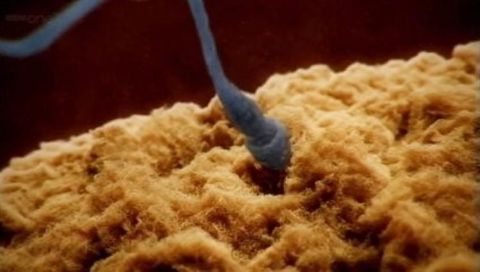
Michael Mosley shows how the body performs countless small miracles to stay alive.
Michael Mosley reveals the ingenious ways the body defends itself against a hostile world.
Thousands of chemicals are used in everyday products – in our water, our food and in the air we breathe. It’s the chemical soup of modern life and it’s virtually impossible to escape them. Is there adequate regulation and testing, or are we in the midst of an uncontrolled, human experiment?
2/10 • Catalyst: Season 1 • 2015 • Health
Brain researcher Jill Bolte Taylor studied her own stroke as it happened -- and has become a powerful voice for brain recovery.
2012 • Health
In just over 100 days, a new coronavirus has taken an unprepared world by storm, infiltrating every corner of the globe, sending entire nations into lockdown, killing thousands and infecting countless more. Across the world, governments are scrambling to react, hospitals are struggling to cope and an increasingly anxious public are starting to panic. The world's media is awash with data, information and misinformation. But what are the facts? What is COVID-19 and why is this strain of coronavirus so dangerous? What happens in our bodies when the virus attacks? How does this compare to previous pandemics? What do all the the numbers really mean, and how can data modelling help us look for an exit strategy? This programme investigates the scientific facts and figures behind the biggest public health crisis in living memory, and explores the latest research from the frontline of the medical and scientific fightback.
On the front lines of the hunt for killer viruses, a shocking discovery is made: viruses, once thought to be a menace to humankind, may in fact be the ultimate creators. Since the beginning of time, they have played a critical role in evolution, shaping us and perhaps even creating us. How could that be? How can an entity seemingly programmed for destruction lead to genetic diversity and new species? To many people, viruses are simply agents for disease, but to Dr. Luis Villarreal, Director of the Center for Virus Research at the University of California Irvine, they may possess far greater power than originally thought. He guides us through evidence that viruses gave rise to the first complex cells, played a role in the diversification of life, changed how our young are born, drove evolution, and perhaps gave us emotions. One expert even suggests that an ancient virus could have entered our genes and rewired us for monogamy. National Geographic investigates a provocative new theory that suggests that all life - including humans - is descended from viruses. Taking us through African jungles in search for new strains, this episode of Explorer presents a startling new view of viruses - toward what may be a remarkable evolutionary moment: the rise of a new human species.
2008 • Health
The film exposes the most popular diets on the planet as well as several misconceptions about weight loss and nutrition. The film follows the audacious filmmaker Michal Siewierski (Food Choices) in his treacherous journey.
2019 • Health
If you could decide today... how long do you want to live?
In a Nutshell • 2017 • Health