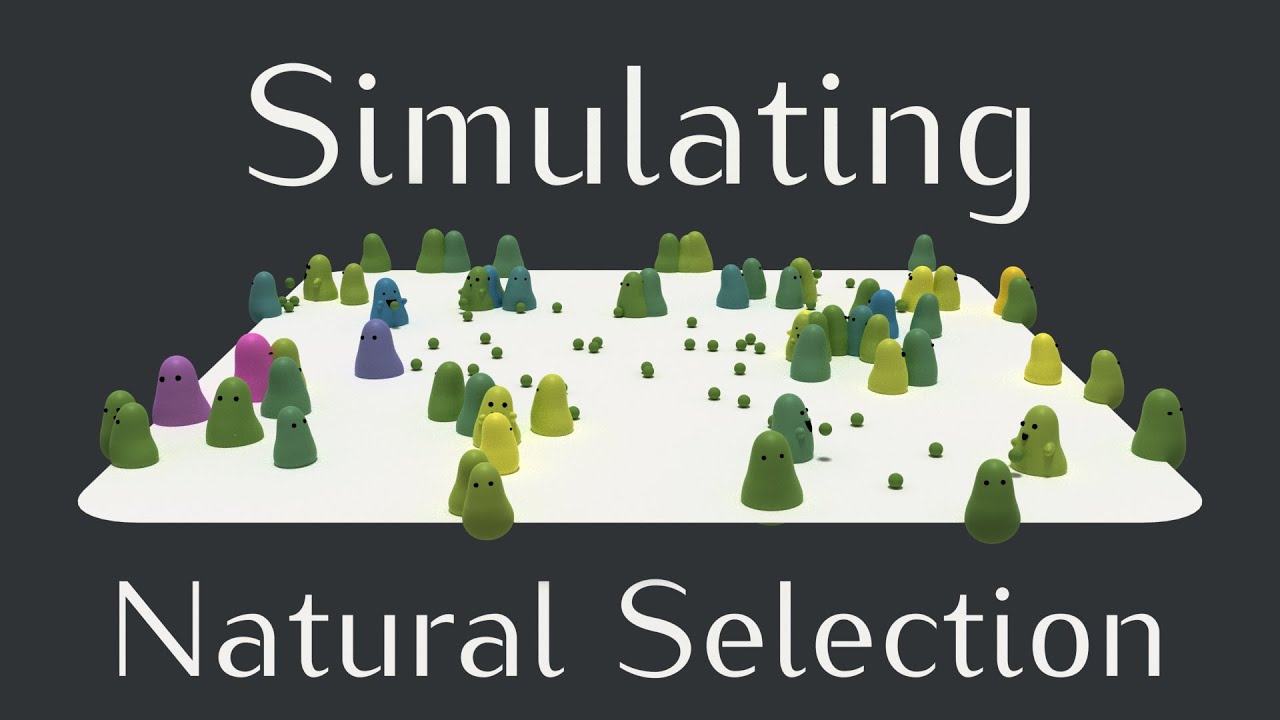
I programmed some creatures. They Evolved.
This is a report of a software project that created the conditions for evolution in an attempt to learn something about how evolution works in…
This is a report of a software project that created the conditions for evolution in an attempt to learn something about how evolution works in…
Interactive simulation of evolution and natural selection. You can also check it here https://labs.minutelabs.io/evolution-simulator/
Sixty-six million years ago, an asteroid wiped out the dinosaurs in a fiery global catastrophe. But we know little about how their successors, the…
Discover the evolutionary secrets of some of the world’s most majestic creatures. From voracious crocodiles and acrobatic birds to stupendous whales…
Are you genetically destined to despise brussels sprouts? We’re all human, but why are we all so different? With the help of a line-up of dogs and…
Professor Alice Roberts explores the story of human evolution, revealing how a humble African ape became a successful global species. With daring…
Professor Alice Roberts meets our ancient ancestral family, from armadillos to sharks, and discovers our true place in the tree of life. With 4D…
By telling the story of our organs, this documentary makes us aware of an evolutionary timeline. Our nose is 40 million years old, our coccyx 25…
Our body is a true time machine. It is a mirror of the history of the living world. If an engineer today had to fabricate the ideal human, he would…
The older a species, the better it is at adapting to change. From the ancient lineage of sharks, who've evolved into perfect predators, to the living…
Bees and ants work selflessly toward a common goal. Bonobos maintain social harmony through sex, while meerkats organize themselves with…
From penguins whose salt-removing eye glands shield them from the harsh ocean to caterpillars whose fake facial markings are meant to mimic a…
Clownfish can change genders, male seahorses carry their young, and some snakes have remnants of leg bones--but why? Discover how significant…
When did we start riding horses? When did dogs become man's best friend? Answering questions like these help us understand our impact on other…
Why are vultures bald? Why do some orangutans have big cheeks? And if giraffes have long necks to help them reach the highest leaves, why do they…
Picture the last two hundred years without the publication of Darwin's "On The Origin of Species" -- how might the scientific conversation have…
Surveys those environments that have been created by and for humans.
Attenborough goes underwater to observe the ocean's life forms and comment on them at first hand.
Investigates remote islands and their inhabitants. Some islands are tips of volcanoes; others are coral atolls. Those that colonise them transform…
Details coastal environments and the effect of tides, of which the highest can be found in the Bay of Fundy in North America. In places, erosion is…
Attenborough describes the course the Amazon, starting high up in the Andes of Peru, whose streams flow into the great river. Young rivers are by…
Starts in NASA's gravity research aircraft to illustrate the effect of weightlessness. There are surprisingly many plants whose seeds are, in effect…
Starts in the Sahara, where the highest land temperatures have been recorded. Rock paintings depict creatures such as giraffes and antelopes…
Explores the grasses which are present all over the world. Grass sustains huge numbers of creatures the world over, particularly in the African…
Ascends a kapok in the South American tropical rainforest to observe "the greatest proliferation of life that you can find anywhere on the surface of…
Begins in northern Norway, 500 kilometres north of the Arctic Circle. Here, there is only just enough light for the pine trees to survive, but it is…
Describes the inhospitable habitats of snow and ice. Mount Rainier in America is an example of such a place: there is no vegetation, therefore no…
Visits the world's deepest valley: the Kali Gandaki river in the Himalayas. Its temperatures range from those of the tropics in its lower reaches to…
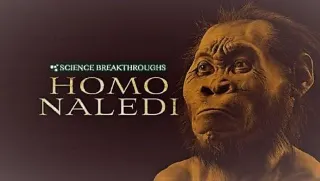
Discovered in 2013, new and puzzling finding of small-skulled fossils of Homo Naledi has scientists trying to understand whether Homo Sapiens lived…
Captured in a single, animated time lapsed shot, and based on archeological findings, we trace our epic journey from the first spark of life billions…
No two islands in the Galapagos are the same. The imperceptible drift of a continental plate keeps each island biologically isolated. David…
Once life arrived in the Galapagos, it exploded into unique and spectacular forms. David Attenborough investigates the driving forces behind such…
The islands of the Galapagos rose explosively from the ocean four million years ago. Although life would not seem viable in such a remote Pacific…
Which of the great primates of 25 million years ago is our common ancestor? Is it pierolapithecus? Follow the journey of primates developing into…
Five hundred million years ago, our previously eyeless distant ancestral creatures suddenly developed eyes, thereby marking a dramatic leap in…
From the shelter of our homes, snow looks magical, but it's a harsh reality to many animals. Snow means freezing temperatures, which these animals…
Alice Roberts explores the latest discoveries in the study of human origins, revealing the transformation that has been brought about in this field…
Fortey travels to Madeira to examine what happens to a volcanic island as it nears the end of its life-cycle and starts sinking back into the sea…
Fortey travels to the rainforests of Madagascar - an ancient island that has spawned some of the most extraordinary groups of plants and animals…
Fortey is on Hawaii to investigate how life colonises a newly-born island. The most remote island group in the world, by some estimates only one new…
This episode reveals how mammals developed from tiny nocturnal forest dwellers to the dominant form of life on the planet following the death of the…
To survive, animals need somewhere to live, a place that provides the necessities of life, shelter from the elements and a refuge from enemies. Good…
In the final challenge of the game of life, raising offspring is the ultimate prize. Continuing the line through the next generation, is the next…
David Attenborough's entertaining romp through the world of monkeys has a serious side: for when we look at monkeys, we can see ourselves. From…
The Miller-Urey experiment was the first attempt to scientifically explore ideas about the origin of life. Stanley Miller simulated conditions…
Biologists teach that all living things on Earth are related. Is there any solid evidence to back this claim? Join us as we explore the facts! We…
The discovery of biological evolution is among the most significant scientific findings of the last 200 years. It has lead us to thousands of new…
Evolution is often considered a complex and controversial topic but it's actually a very simple concept to understand. Watch this short animation to…