Day the Dinosaurs Died
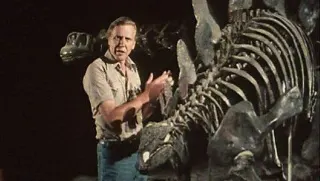
66 million years ago a seven-mile-wide asteroid collided with Earth, triggering a chain of events suspected of ending the dinosaurs' reign. But…
66 million years ago a seven-mile-wide asteroid collided with Earth, triggering a chain of events suspected of ending the dinosaurs' reign. But…
The birth of our Solar System was both violent and chaotic. As planets formed around our Sun, gravity and luck determined their fate: some are tossed…
Second Genesis follows planetary scientist Carolyn Porco as she explores what it takes to look for life beyond Earth, and what conditions are…
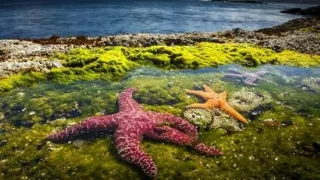
At the coast, two worlds collide. Coasts is the story of how our Blue Planet’s wildlife survives in this ever changing world. It’s a roller-coaster…
Sagan discusses comets and asteroids as planetary impactors, giving recent examples of the Tunguska event and a lunar impact described by Canterbury…
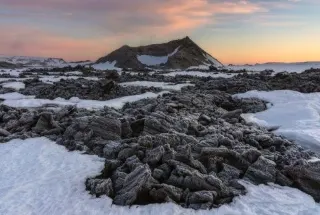
Steamy underworlds hiding mysterious treasures, extreme waters teeming with unique life, and jarring rock formations made of frozen lava.
It's hard to get to space.But there is a concept that might make it possible: the space elevator. How exactly does it work.
The final episode deals with the evolution of the most widespread and dominant species on Earth: humans. The story begins in Africa, where, some 10…
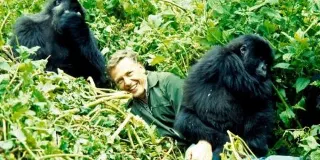
The penultimate instalment investigates the primates, whose defining characteristics are forward-facing eyes for judging distance, and gripping hands…
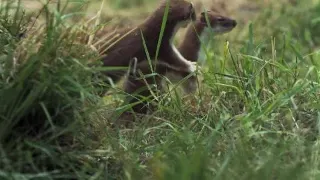
This programme surveys mammal herbivores and their predators. The herbivores began to populate the forests when the dinosaurs disappeared, and many…
This episode continues the study of mammals, and particularly those whose young gestate inside their bodies. Attenborough asks why these have become…
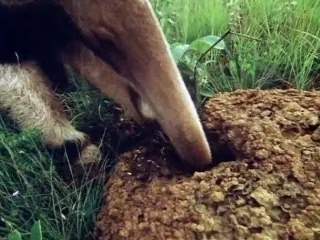
This instalment is the first of several to concentrate on mammals. The platypus and the echidna are the only mammals that lay eggs (in much the same…
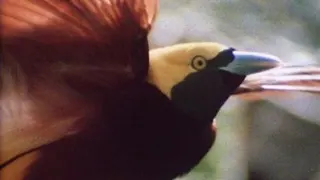
This programme focuses on birds. The feather is key to everything that is crucial about a bird: it is both its aerofoil and its insulator. The…
This episode is devoted to the evolution of reptiles. They are not as restricted as their amphibian ancestors, since they can survive in the hottest…
The next instalment describes the move from water to land. The fish that did so may have been forced to because of drought, or chose to in search of…
This episode details the relationship between flowers and insects. There are some one million classified species of insect, and two or three times as…
This instalment examines the earliest land vegetation and insects. The first plants, being devoid of stems, mainly comprised mosses and liverworts…
The next programme explores the various sea-living invertebrates. In Morocco, the limestones are 600 million years old, and contain many invertebrate…
The episode begins in the South American rainforest whose rich variety of life forms is used to illustrate the sheer number of different species…
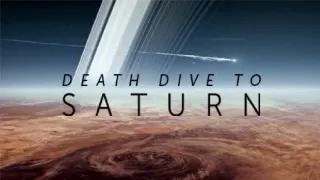
Almost everything we know today about the beautiful giant ringed planet comes from Cassini, the NASA mission that launched in 1997 and arrived at…
"When a scientist gazes silently up at the sky..."
"I have a friend who is an artist, and sometimes taken a view which I don't agree with very well."
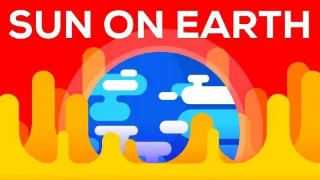
What would happen if we bring a sample (the size of a house) of the Sun to Earth?
"That's home. That's us. On it, everyone you ever heard of, every human being who ever lived.."
Carl Sagan talks about our place in the universe
Humanity's first steps on the Moon.
Carl Sagan talks about our future and the exploration of space
"You might have thought, as I did then, that our species would be on Mars before the century was over"
Our species has discovered a way to communicate through the dark, to transcend immense distances
"It is beyond our powers to predict the future"
Carl Sagan talks about religion and the universe
It's our fate to live in the dark...
What are our frontiers?
Our Sun could erupt at any moment, spewing a vast wave of charged particles toward Earth that could leave millions of people without power for up to…
The Sun created our Solar System and in a fit of cosmic cannibalism will engulf and destroy it. However, our Solar System will see many changes…
For millennia humans have seen our star, the Sun, through the Earth’s atmosphere. But the Space Age has given us a new perspective that has revealed…
Earth has a companion in space so large that it rules our nights, our months, our ocean tides. Why Earth should have such a moon is one of the…
For centuries the giant planets floated on the fringes of the solar system as distant objects in the eyepieces of astronomers. But in December 1973…
This is the story of pioneering missions to neighboring planets and our first glimpses of their awe-inspiring terrains. From the giant lava plains of…
We reveal the planetary enigmas on our doorstep and embark on the New Horizons voyage to photograph Pluto. Will our encounter with this tiny ball of…
We strip apart the Sun and tear off boiling seas of plasma, light particles, and force fields layer by layer to explore the secrets that lie beneath…
Volcanoes have long helped shape the Earth. But what is less well known is that there are volcanoes on other planets and moons that are even more…
Telescopes on six solar observation satellites are currently monitoring the sun. The satellites include Japan's Hinode and the SDO developed by the…
Could human settlements on Mars become reality as early as 100 years from now? Artificial micro organisms created with the latest techniques in…
What if you could get behind the wheel and race through space? We scale down the Solar System to the continental United States and place the planets…
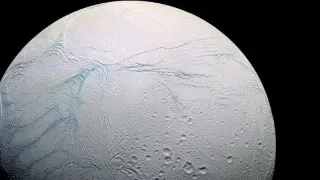
Europa - an icy moon of Jupiter 485 million miles away from Earth - may be our best hope for finding alien life in our solar system. Everywhere we…
Discoveries of new planets have revealed countless worlds much stranger than Earth. Some of these strange worlds don't have stars; others are made…
Life once existed on Mars, but a series of devastating mass extinctions have made present-day life nearly impossible. The latest science shows how…