Professor Jonathan Van-Tam takes a deep dive into the fascinating and varied world of viruses. He aims to show how public health measures, combined with ground-breaking science, will have an impact far beyond Covid-19, including breakthroughs that could help fight other infectious diseases, genetic disorders and even cancer.
Hope you're finding these documentaries fascinating and eye-opening. It's just me, working hard behind the scenes to bring you this enriching content.
Running and maintaining a website like this takes time and resources. That's why I'm reaching out to you. If you appreciate what I do and would like to support my efforts, would you consider "buying me a coffee"?
BTC: bc1q8ldskxh4x9qnddhcrgcun8rtvddeldm2a07r2v
ETH: 0x5CCAAA1afc5c5D814129d99277dDb5A979672116
With your donation through , you can show your appreciation and help me keep this project going. Every contribution, no matter how small, makes a significant impact. It goes directly towards covering server costs.
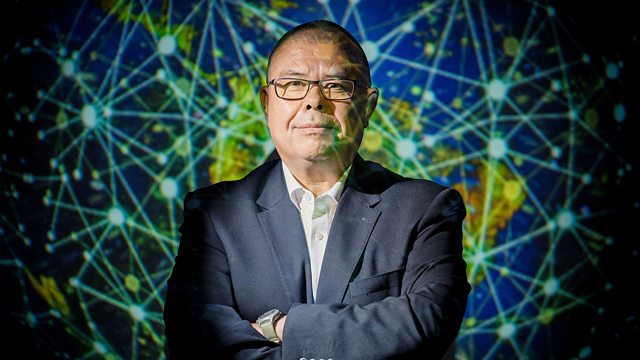
Professor Jonathan Van-Tam takes a deep dive into the fascinating and varied world of viruses. He aims to show how public health measures, combined with ground-breaking science, will have an impact far beyond Covid-19, including breakthroughs that could help fight other infectious diseases, genetic disorders and even cancer.
2021 • Health
England's Deputy Chief Medical Officer Jonathan Van-Tam is joined by a host of top UK scientists to take a deep dive into the science of viruses. Plus, how new research could have an impact far beyond Covid-19.
2021 • Health
England's Deputy Chief Medical Officer and epidemiologist Jonathan Van-Tam takes a deep dive into viruses and reveals why discoveries and advances made during the on-going Covid-19 pandemic mean biological science will never be the same again.
2021 • Health
Chocolate reduces stress. Fish stimulates the brain. Is there any truth to such popular beliefs? The findings of researchers around the world say yes: It appears we really are what we eat. A study in a British prison found that inmates who took vitamin supplements were less prone to violent behavior. And in Germany, a psychologist at the University of Lübeck has shown that social behavior is influenced by the ingredients consumed at breakfast. But what really happens in the brain when we opt for honey instead of jam, and fish rather than sausage? Scientists around the world are trying to find out. Neuro-nutrition is the name of an interdisciplinary research field that investigates the impact of nutrition on brain health. Experiments on rats and flies offer new insight into the effects of our eating habits. When laboratory rats are fed a diet of junk food, the result is not just obesity. The menu also has a direct influence on their memory performance. The role of the intestinal flora has been known for some time, but scientists are currently discovering other relationships. So-called "brain food" for example: The Mediterranean diet that’s based on vegetables and fish is said to provide the best nutrition for small grey cells. Omega-3 fatty acids, which are found in fish, for example, protect the nerve cells and are indispensable for the development of the brain - because the brain is also what it eats!
2020 • Health
When you breathe, you transport oxygen to the body’s cells to keep them working, while also clearing your system of the carbon dioxide that this work generates. How do we accomplish this crucial and complex task without even thinking about it? Emma Bryce takes us into the lungs to investigate how they help keep us alive.
Frontline documented how people and countries responded to COVID-19 across cultures, races, faiths and privilege.
2 • The Virus That Shocked the World PBS FRONTLINE • 2021 • Health
It came without a warning and spread like wildfire, but the origins of the Novel Coronavirus remain a mystery. A look at the origins and impacts of the Novel Coronavirus is featured.
2020 • Health
Imagine if the food you eat could 'clean' your body and make you feel well. Dr Giles Yeo investigates the latest diet craze and social media sensation - clean eating. In a television first, Giles cooks with Ella Mills, the Instagram entrepreneur behind Deliciously Ella, one of the most popular brands associated with clean eating, and examines how far her plant-based cooking is based on science. She tells him clean has lost its way: "Clean now implies dirty and that's negative. I haven't used it, but as far as I understood it when I first read the term, it meant natural, kind of unprocessed, and now it doesn't mean that at all. It means diet, it means fad". Giles sifts through the claims of the Hemsley sisters, who advocate not just gluten-free but grain-free cooking, and Natasha Corrett, who popularises alkaline eating through her Honestly Healthy brand. In America, Giles reveals the key alternative health figures whose food philosophies are influencing the new gurus of clean. He discovers that when it comes to their promises about food and our health, all is not always what it appears to be. Inside a Californian ranch where cancer patients have been treated with alkaline food, Giles sees for himself what can happen when pseudoscience is taken to a shocking extreme.
The story of a human life, from first breath to last. Told from within the body.