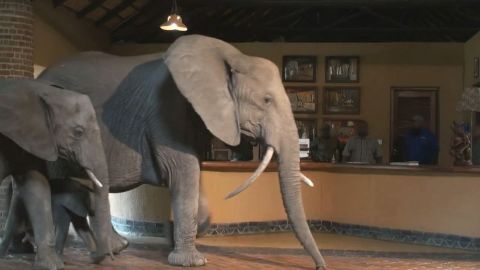
A look at why a herd of wild elephants check into the same hotel every year and what is causing giant bubble rings off the coast of Portland, Maine.
Hope you're finding these documentaries fascinating and eye-opening. It's just me, working hard behind the scenes to bring you this enriching content.
Running and maintaining a website like this takes time and resources. That's why I'm reaching out to you. If you appreciate what I do and would like to support my efforts, would you consider "buying me a coffee"?
BTC: bc1q8ldskxh4x9qnddhcrgcun8rtvddeldm2a07r2v
ETH: 0x5CCAAA1afc5c5D814129d99277dDb5A979672116
With your donation through , you can show your appreciation and help me keep this project going. Every contribution, no matter how small, makes a significant impact. It goes directly towards covering server costs.
A look at what would dare take on the ocean's deadliest predator, why a spider lights up like a Christmas tree, and why a wild animal begins to deliver unwanted newspapers like a paperboy.
2019 • Nature
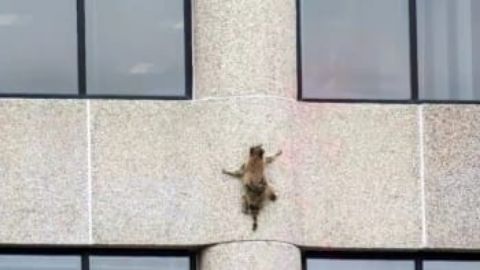
A look at why a raccoon would scale a 25-story skyscraper, why one mother duck would have a super-sized flock of 76 ducklings, and what would motivate a bird to feed a school of fish.
2019 • Nature
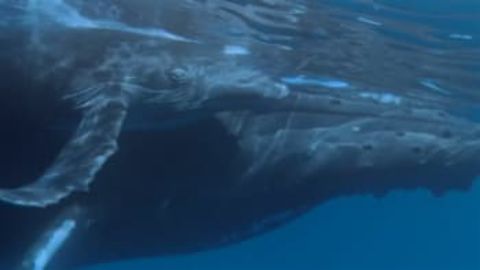
A look at why a humpback whale would hold a diver hostage, how a colony of 1.5 million animals hide from the world in plain sight, and how a surprising stash of acorns could disrupt a whole town.
2019 • Nature
A look at why a skunk would do a handstand, why 5,000 birds fell from the sky in Arkansas, and what would make a frog flash like a lighthouse.
2019 • Nature
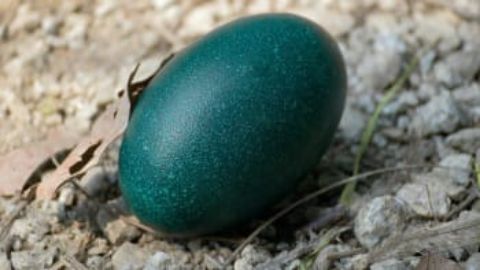
A look at if fish really can predict earthquakes and why eggs are egg shaped.
2019 • Nature
A look at the possibility that zombie spiders are real and why would a pod of beluga whales adopt a unicorn of the sea.
2019 • Nature
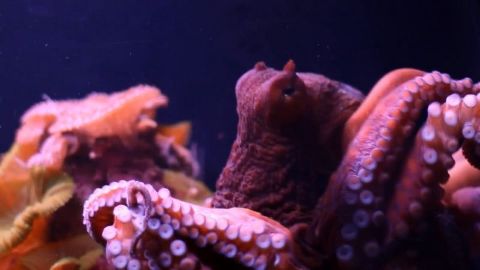
A look at how a bird could sing without using its voice and how an octopus could simply disappear from his aquarium tank.
2019 • Nature
A look at what could make an animal vanish into thin air, what could cause the sea to take on an eerie glow, and what event would bring killer whales together in huge numbers.
2019 • Nature
A look at what animals are breaking into thousands of cars every year, how ants form a ten-foot bridge using only their bodies, and why did the fish cross the road.
2019 • Nature
A look at how spiders covered a town in webs overnight and why a lake in South America is the lightning capital of the world.
2019 • Nature
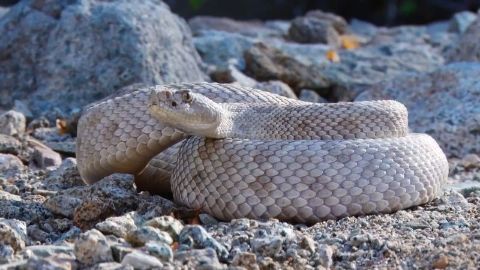
Is it possible that a snake could exist totally undetected? What has brought this big cat fight to ear piercing decibels? Why is this lone dolphin getting muddy?
2019 • Nature
How did a moose get stuck in an apple tree? Why is a crow snowboarding on a jam jar lid? Is Yellowstone's super volcano about to erupt?
2019 • Nature
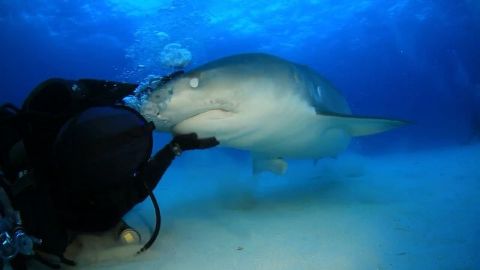
A look at what would cause a ferocious tiger shark to cuddle up with a diver and why pigs are swimming in the Caribbean; and what mysterious blobs have washed up by the thousands on the shores of Oregon.
2019 • Nature
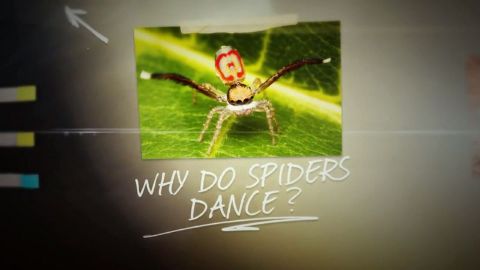
A look at why some spiders disco dance; a mysterious creature is preying on Europe's sheep; a whole town is engulfed by bubbling foam.
2019 • Nature
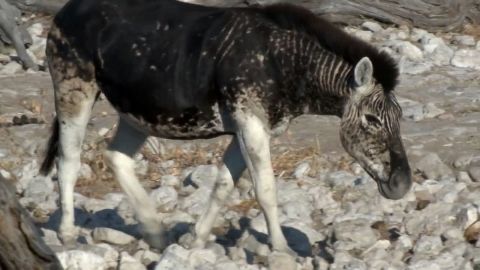
A look at why goats risk life and limb to climb an almost vertical dam wall; a zebra has no stripes; a school of fish swarm a diver.
2019 • Nature
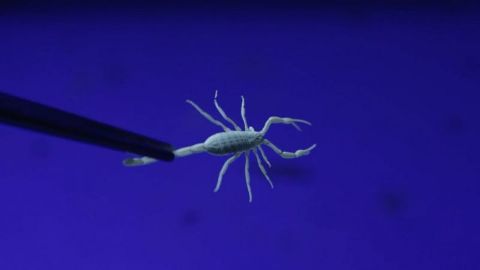
A look at why a leopard let its dinner escape; an ominous dark mass looming over an Icelandic lake; some scorpions glow in the dark.
2019 • Nature
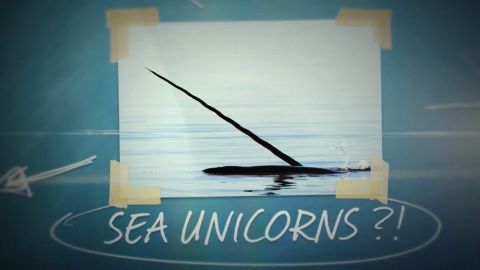
Narwhals are the unicorns of the sea, but what is the point of those tusks? What could swallow 50-foot trees in seconds? What animal has changed the face of Yellowstone?
2019 • Nature
Where would you go to find an enchanted underwater forest? How come some Mexican rattlesnakes have lost their rattle? And why does an Indian elephant look like its smoking cigarettes?
2019 • Nature
A look at why a seal throw an octopus at a kayaker; why a moth is drinking from the eye of a bird in the Amazon jungle and what surprising creature has been leaping out of the Irish Sea.
2019 • Nature
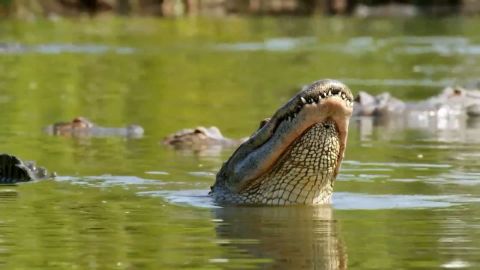
A look at how a dung beetle standing on its head can roll a ball in a straight line; if egrets ever regret hanging out next to hungry alligators; and what ghostly creature was caught on camera 3000 feet below the ocean's surface.
2019 • Nature
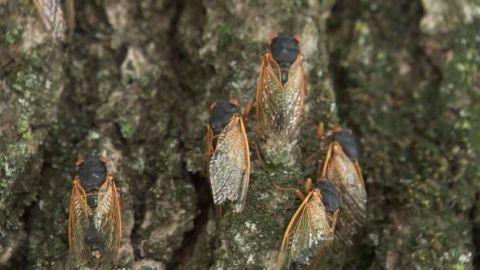
A look at how bats avoid bumping into each other at night; why a bottlenose dolphin seeks out the help of a scuba diver; are cicadas expert mathematicians.
2019 • Nature
A look at why a herd of wild elephants check into the same hotel every year and what is causing giant bubble rings off the coast of Portland, Maine.
2019 • Nature
A look at which animals get the giggles; what would cause the sea lions of San Francisco to mysteriously swim away all at once, manta rays that synchronize swim.
2019 • Nature
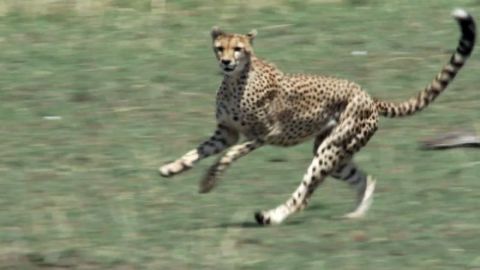
A look at what causes a pair of giraffes to turn white; why are millions of birds creating crazy patterns; why would the world's fastest land animal give up the hunt.
2019 • Nature
The penultimate instalment investigates the primates, whose defining characteristics are forward-facing eyes for judging distance, and gripping hands with which to grasp branches, manipulate food and groom one another. The programme begins in Madagascar, home to the lemurs, of which there are some 20 different types. Two examples are the sifaka, which is a specialised jumper, and the indri, which has a well-developed voice. Away from Madagascar, the only lemur relatives to have survived are nocturnal, such as the bushbaby, the potto and the loris. The others were supplanted by the monkeys and a primitive species that still exists is the smallest, the marmoset. However, Attenborough selects the squirrel monkey as being typical of the group. Howler monkeys demonstrate why they are so named their chorus is said to the loudest of any mammal and their prehensile tails illustrate their agility.
12/13 • Life on Earth • 1979 • Nature
Where land meets sea, rockhopper penguins, orca whales, and elephant seals find incredible ways to cut through the chaos.
S1E8 • Earth Sounds • 2024 • Nature
A team journeys through Angola to Botswana to save the Okavango Delta, revealing its beauty and threats.
2018 • Nature
Never before has a film crew had such unrestricted access to the wonders of Saudi Arabia's seas. Desert Seas narrated by Sir David Attenborough tells the story of how the peninsula of Arabia transformed from an ocean millions of years ago to the desert it is today.
2011 • Nature
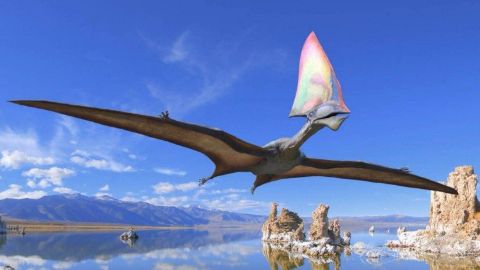
Two hundred million years ago there was an extraordinary development in the history of life: an ancient group of reptiles made a giant evolutionary leap into the skies. In this groundbreaking, BAFTA winning, documentary, David Attenborough travels back in time to discover how and why these creatures took flight, and why after 150 million years of aerial domination they vanished. Using state of the art CGI, and based on new finds and the latest research, Flying Monsters recreates these spectacular creatures and takes us into their world. Beginning on Dorset’s 'Jurassic Coast', David’s journey takes him to sites around the world, from Southern France to New Mexico. With the help of a team of scientists he unravels one of palaeontologys enduring mysteries, how did lizards the size of giraffes defy gravity and soar through prehistoric skies? Driven by the information he finds as he attempts to answer these questions, Attenborough finds that the marvel of pterosaur flight has evolutionary echoes that resonate even today.
2011 • Nature
The final episode deals with the evolution of the most widespread and dominant species on Earth: humans. The story begins in Africa, where, some 10 million years ago, apes descended from the trees and ventured out into the open grasslands in search of food. They slowly adapted to the habitat and grew in size. Their acute sense of vision led to them standing erect to spot predators, leaving their hands free to bear weapons. In addition, the primitive apemen also had stones that were chipped into cutting tools. Slowly, they grew taller and more upright, and their stone implements became ever more elaborate.
13/13 • Life on Earth • 1979 • Nature