Beneath the Waves
Focuses on the oceans that surround the continent's coastline, which are home to more than 60 per cent of the world's marine species. Featuring…
Focuses on the oceans that surround the continent's coastline, which are home to more than 60 per cent of the world's marine species. Featuring…
This special (9th) episode brings together highlights from the series, from hidden forests and turbulent coasts to vast, unexplored deserts.
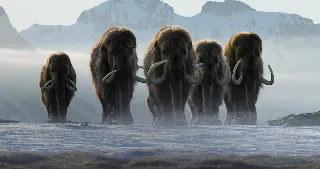
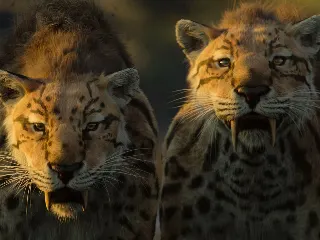
As the Ice Age thawed, humans rose above the rest. But the possibility of a sixth mass extinction now looms: Has our ingenuity caused our downfall?
Emerging from the dinosaurs' shadows, mammals went from underdogs to global power, with game-changing adaptations that would conquer land, air and…
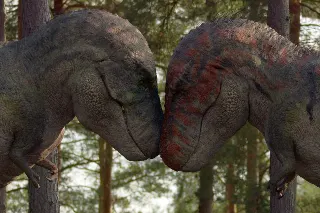
The dinosaurs met their end with a cataclysmic asteroid impact. Rising from the ashes, birds reinvented themselves into a dynasty 10,000 species…
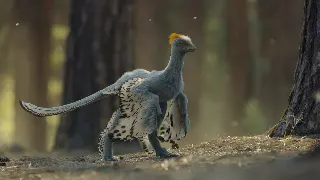
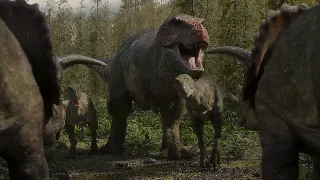
The formation of continents with varied environments allowed for an explosion of biodiversity — and turbo-charged the evolution of mighty dinosaurs.
After Earth's third mass extinction, mammals' surviving ancestors ruled the supercontinent Pangea. But lizards soon ushered in the age of reptiles.
Sprawling moss, towering trees, flying insects, limbed amphibians: Early species vied for domination as the land went from hostile to hospitable.
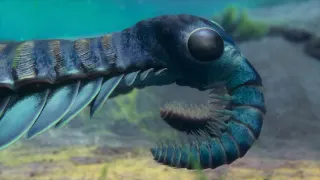
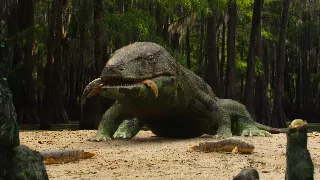
For billions of years, land on Earth was uninhabitable. But in the seas, predation allowed species to thrive before — and after — two mass…
Evolution. Competition. Mass extinction. Three fundamental rules have driven the rise and fall of life on Earth for over four billion years.
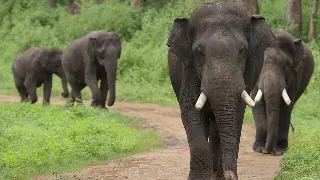
As snow geese, antelope, army ants and gray whales dodge predators and pollution, get a closer look at how the modern world impacts animal migration.
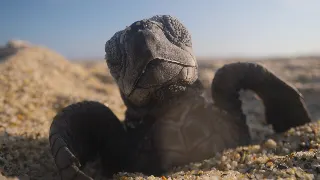
Left to fend for themselves until they find their footing, baby sea turtles, elephant seal pups, pumas and crabs bravely trek towards adolescence.
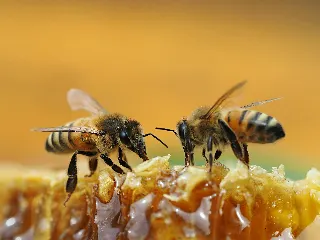
As summer spreads across our solar-powered planet, honey bees toil, snow geese breed, tadpoles awaken and lions stalk wildebeest in search of lush…
Britain is globally important for wildlife, but it is also one of the most nature depleted countries in the world. Restoring nature can have…
David Attenborough introduces the colourful underwater world of Britain and Ireland's oceans, including thousands of grey seals congregating on the…
The wildlife that lives in Britain's freshwater environments. Atlantic salmon battle their way upstream in one of the greatest migrations on the…
From flower meadows to the rich open landscapes of our mountains some extraordinary and dramatic wildlife stories are revealed. Featuring bees that…
In an ancient pine tree in the Cairngorms, two eagle chicks are on the verge of fledging their gargantuan nest. In winter in the Forest of Dean, the…
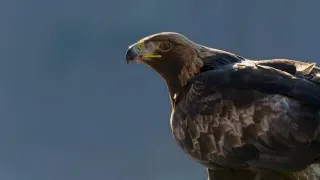
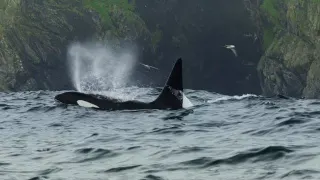
Killer whales hunt for seals in our seas, golden eagles scavenge in snowy Scottish mountains, sinister woodland plants take pollinating insects…
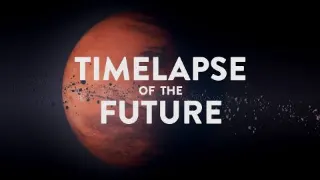
How's it all gonna end? This experience takes us on a journey to the end of time, trillions of years into the future, to discover what the fate of…
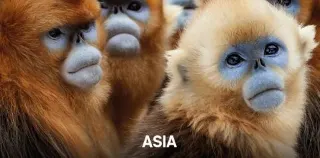
Asia - the most varied and extreme continent - stretching from the Arctic Circle to the equator. Walrus gather in huge numbers in the frozen north…
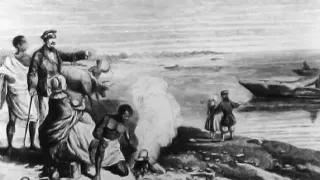
First transmitted in 1965, David Attenborough retraces the steps of the famous Scottish explorer Dr David Livingstone in the final part of his…
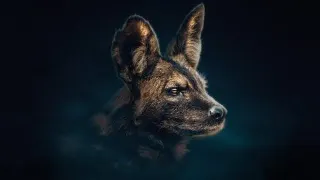
Documentary following endangered species fighting for their survival. A painted wolf matriarch's feud with her daughter threatens to bring the…
We look at the ways in which plants have adapted to survive in the harshest climates on Earth. Whether in the driest, hottest deserts or the coldest…
This episode examines how plants either share environments harmoniously or compete for dominance within them. It looks at the ways in which plants…
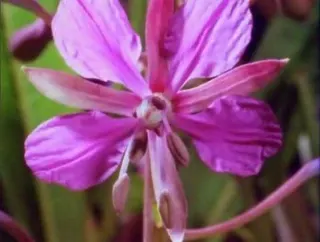
This instalment looks at the ways in which plants procreate. Examining how plants use brightly coloured flowers and sweet scents to lure animals to…
This episode shows the ways in which plants defend themselves against animals, and grow in search of sunlight, nutrients and water, all the elements…
Using time-lapse photography this episode examines the ways in which plants travel from place to place in search of a new area to grow in.
On a cosmic time scale, human history is as brief as the blink of an eye. By compressing all 13.8 billion years of time into a 10 minute scale, this…
In the final film, he reflects on the dramatic impact that humankind has had on the natural world within his own lifetime. He tells the surprising…
David Attenborough reviews the scientific discoveries that have transformed our view of life on earth during his lifetime. How and where did life…
Sir David Attenborough gives his unique perspective on over half a century of innovation in wildlife filmmaking. He revisits key places and events in…
The story of how more than 220 dinosaur bones were found in the Argentinean desert, which were found to have come from a previously undiscovered…
"Magical Appearances" explores how swallows magically appear each spring and asks how did complex and beautiful insects like butterflies suddenly…
David Attenborough looks at the eyes of squid and owls and how they've managed to maximise their vision.
David Attenborough highlights the curiosities that have led to accusations of forgery, but have ultimately helped assist the rethinking of evolution…
Never before has a film crew had such unrestricted access to the wonders of Saudi Arabia's seas. Desert Seas narrated by Sir David Attenborough tells…
David Attenborough examines creatures that have fascinated us for centuries. A look at some species with remarkable regenerative powers.
David Attenborough examines more creatures that have fascinated us for centuries. A look at some species with remarkable healing properties.
David Attenborough examines creatures that have fascinated us for centuries. A look at some species with unusual styles of consuming food.
David Attenborough examines creatures that have fascinated us for centuries. This episode looks at the expandable bodies of anacondas and camels.
David Attenborough examines creatures that have baffled us for centuries. This episode looks at two animals that use tools, orangutans and crows.
David Attenborough examines creatures that have baffled us for centuries. This episode looks at how fleas jump and tracks the true speed of a cheetah.
"Strange Parents" asks how we usually recognise animals as either male or female and how each sex normally plays a particular role in their own life…
We'll find out how nature is incredibly inventive and has produced two unique mechanisms of natural construction that have fascinated scientists for…
In this episode we explore the remarkable adaptations of two creatures that have evolved to survive the most challenging of conditions and seem to…
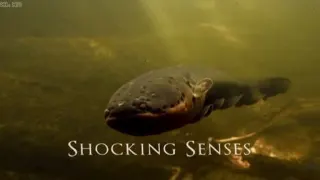
Plants and animals have some curious super senses that enable them to see, hear and feel things that are quite invisible to us.
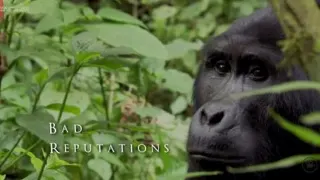
After initially gaining frightening reputations, it's now known that gorillas and bats are a lot gentler and considerate than their early reputations…