The Humane Economy • 2016 • episode "S1E6" Curiosity Retreats: 2016 Lectures

Category: Economics

Wayne Pacelle, President of the Humane Society of the United States, draws a practical roadmap for how we can use the marketplace to promote the welfare of all living creatures, and how industries, innovators and consumers are coming together in this powerful social movement.

Make a donation

Buy a brother a hot coffee? Or a cold beer?

Hope you're finding these documentaries fascinating and eye-opening. It's just me, working hard behind the scenes to bring you this enriching content.

Running and maintaining a website like this takes time and resources. That's why I'm reaching out to you. If you appreciate what I do and would like to support my efforts, would you consider "buying me a coffee"?

Donation addresses

Buy Me a Coffee at ko-fi.com

patreon.com

BTC: bc1q8ldskxh4x9qnddhcrgcun8rtvddeldm2a07r2v

ETH: 0x5CCAAA1afc5c5D814129d99277dDb5A979672116

With your donation through , you can show your appreciation and help me keep this project going. Every contribution, no matter how small, makes a significant impact. It goes directly towards covering server costs.

Curiosity Retreats: 2016 Lectures • 2016 • 8 episodes •

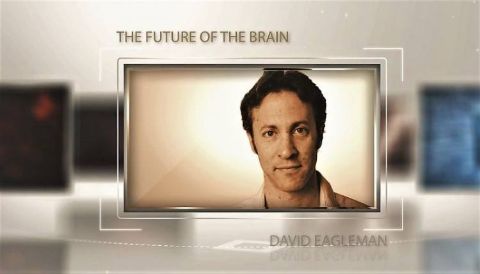
The Future Of The Brain

What would the world be like if we could expand our senses beyond our current capacities? Neuroscientist David Eagleman is working on the cutting edge of technology that will change what it means to be human.

2016 • Brain

Our Virtual Reality

As the ability to blur the physical and digital worlds becomes a global phenomenon, Nonny de la Pena is harnessing that transformative ability to tell stories like never before. Learn how she uses the immersive power of VR to help people connect to important issues they might otherwise ignore.

2016 • Technology

To Pluto and Beyond

New Horizons took its famed look at Pluto and is now racing toward its next destination… and Alan Stern will take us all on the journey of exploration with it!

2016 • Astronomy

Our Mathematical Universe

Renowned cosmologist Max Tegmark will take us on a journey through some of the greatest mysteries of our existence, and through the physics, astronomy and mathematics that are the foundation of his work.

2016 • Math

The Human Journey a Genetic Odyssey

Geneticist Spencer Wells presents a broad view of the DNA Testing industry from its beginnings to its broader acceptance by the general public. Now an individual can, for the first time in history, read his own genetic blueprints.

2016 • Health

The Humane Economy

Wayne Pacelle, President of the Humane Society of the United States, draws a practical roadmap for how we can use the marketplace to promote the welfare of all living creatures, and how industries, innovators and consumers are coming together in this powerful social movement.

2016 • Economics

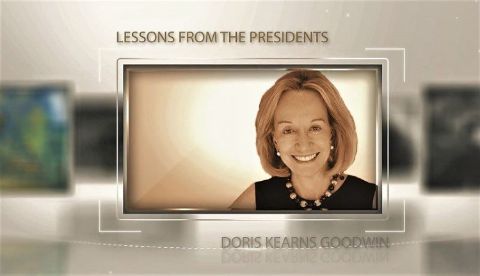
Lessons from the Presidents

Through her unique understanding of some of our greatest presidents, Doris Kearns Goodwin, writer and presidential biographer, provides leadership lessons we all can learn from in our never-ending pursuit to live our fullest and most successful lives.

2016 • Lifehack

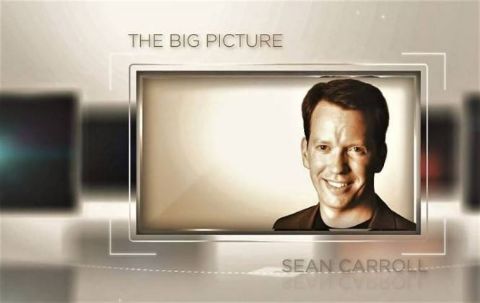
The Big Picture

Award-winning physicist Sean Carroll is known for his keen observations on the relationship between humanity and the laws of nature, and finding where human purpose and meaning fit into a scientific world view.

2016 • Physics

You might also like

Plutocrats

This documentary travels through a world of joblessness, debt, and economic uncertainty to the sovereign nation of the plutocrats, where each crisis seems to offer a new business opportunity. In America, where the 2008 financial meltdown cost $4 trillion in economic output, fortunes were made by the very people who precipitated the disaster while millions lost their homes and their savings. Austerity in Europe, economic stagnation in Asia, a lost generation of the young and unemployed - signs we are living through a fundamental global reorganization, the result of which no-one can predict. The world of the 1% has arrived, and the wealth gap is now greater in many countries than during the Gilded Age, the era of the Rockefellers, Carnegies and Vanderbilts. Can our stressed democracies deal with the fallout? Or have governments simply become instruments of the new elite?

2017 • Economics

Nuclear Power

Over 10% of the world's electricity comes from nuclear power. But with radioactive waste and the threat of nuclear meltdown, are we playing with fire?

S1E8History 101 • 2020 • Economics

The Decade the Rich Won

The people with power in Britain reveal how their decisions shook our politics, transformed our economy and reshaped society in the decade following the 2008 financial crisis. Chapter 1: The Government and the Bank of England took drastic action to save the UK economy in the aftermath of the 2008 financial crisis. Insiders from the world of finance reveal how decisions made to solve the crisis allowed them to 'make out like bandits". From bailing out the banks to pursuing a faster, deeper austerity than any other country, Britain's policymakers shatter the status quo in a desperate bid to save the economy. This first of two programmes features first-hand accounts from key players, reliving the moments when the big decisions were taken. Chapter 2: The government and the Bank of England are forced to react to the economic shocks brought on by Brexit and the Covid-19 pandemic. Theresa May enters office in the aftermath of Brexit, setting her sights on tax-dodgers, bloated executive pay and unethical multi-national companies. But as May struggles to implement Brexit, wealth inequality and executive pay are increasing while average wages are barley growing, sparking anger and protests. After May fails to get her Brexit deal through Parliament, Boris Johnson enters office promising to "level up" the UK economy but his plan is derailed by the Covid-19 pandemic.

2022 • Economics

Propaganda: The Manufacture of Consent

What makes an entire country take self destructive decisions of eating unhealthy, smoking cigarettes & going to war? In 1916, Woodrow Wilson ran on a platform strongly opposing US entry into WWI. But just a few months after taking office, the United States declared war on Germany. Soon after, the American people, so firmly opposed to the war just a year earlier, were enthusiastic supporters. What happened? The short answer: Sustained consumption of propaganda! PROPAGANDA: THE MANUFACTURE OF CONSENT is a revealing documentary about how public relations grew out of wartime propaganda-and a portrait of one of the key architects of the field, Edward Bernays. The nephew of Sigmund Freud, Bernays refined the techniques used so successfully during the war to sell products to consumers, and ultimately to sell capitalism itself to workers. Public relations was also critical in building support for the New Deal, and in the pushback against it from the National Association of Manufacturers, which created materials including films aimed at children on the glories of manufacturing. Bacon and eggs as part of a hearty breakfast? The work of Bernays on behalf of a bacon company. Cigarettes as a sign of women's liberation? Bernays, again. Casting the democratically elected government of Guatemala as a Communist threat to justify US invasion on behalf of the United Fruit Company? Once more, Bernays. There was nothing shadowy about Bernays. He wrote a book detailing his techniques and discusses them in an archival interview with Bill Moyers from 1983, where we see his pride in hijacking the women's suffrage movement in order to sell more cigarettes—one of many illuminating moments in this film. Featuring Noam Chomsky, Chris Hedges, Public Relations Museum co-founder Shelley Spector, historian Stuart Ewen, sociologist David Miller, and Bernays' daughter Anne, PROPAGANDA offers an insightful look into the development of public relations techniques, and how they continue to affect us today.

2017 • Economics

Retirement

Retiring comfortably middle-class in America requires more than $1 million in savings. How did the dream of golden years leisure get so out of reach?

S1E5Money Explained • 2011 • Economics

Dominion

Dominion uses drones, hidden and handheld cameras to expose the dark underbelly of modern animal agriculture, questioning the morality and validity of humankind's dominion over the animal kingdom. While mainly focusing on animals used for food, it also explores other ways animals are exploited and abused by humans, including clothing, entertainment and research.

2018 • Economics