Gloria Hunniford and Chris Bavin make sense of which foods we should and shouldn't be eating. Gloria reveals her own experience of being diagnosed as pre-diabetic. With headlines suggesting millions are at risk of developing diabetes, she exposes how changing your diet can stop the condition in its tracks, and perhaps even reverse it. Chris unpicks which fruit and veg are best to eat. After years of working as a greengrocer, even he's unsure if he's eating enough, and how those five-a-day really stack up.
Hope you're finding these documentaries fascinating and eye-opening. It's just me, working hard behind the scenes to bring you this enriching content.
Running and maintaining a website like this takes time and resources. That's why I'm reaching out to you. If you appreciate what I do and would like to support my efforts, would you consider "buying me a coffee"?
BTC: bc1q8ldskxh4x9qnddhcrgcun8rtvddeldm2a07r2v
ETH: 0x5CCAAA1afc5c5D814129d99277dDb5A979672116
With your donation through , you can show your appreciation and help me keep this project going. Every contribution, no matter how small, makes a significant impact. It goes directly towards covering server costs.
Gloria Hunniford and Chris Bavin investigate which of the claims about foods said to help people live longer are true. The effects of booze on the brain are revealed, there are surprises as the team exposes how food affects migraines,
2017 • Health
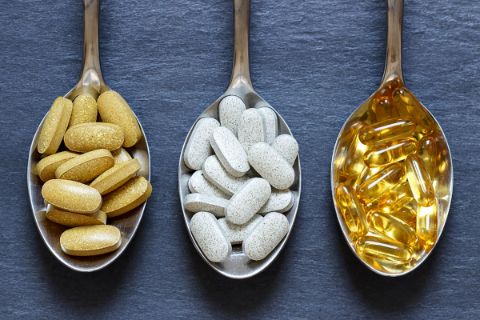
Following reports that taking extra vitamins is pointless and possibly even dangerous, Gloria discovers whether the vitamins she takes each day are really necessary or if she can get all the nutrients she needs from her food? Chris tests out a new meal plan to see what difference changing what you eat makes to how you power through the day, and even how you sleep.
2016 • Health
Gloria Hunniford and Chris Bavin make sense of which foods we should and shouldn't be eating. Gloria reveals her own experience of being diagnosed as pre-diabetic. With headlines suggesting millions are at risk of developing diabetes, she exposes how changing your diet can stop the condition in its tracks, and perhaps even reverse it. Chris unpicks which fruit and veg are best to eat. After years of working as a greengrocer, even he's unsure if he's eating enough, and how those five-a-day really stack up.
2016 • Health
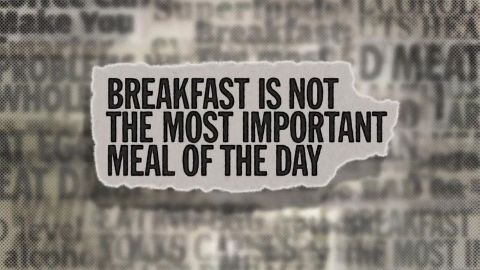
Gloria Hunniford and Chris Bavin unravel the truth behind food stories that have dominated the front pages. In this episode, they discover how it's not just what you eat that can make a difference to how you feel, but when you have it and how you cook it. The truth behind the headlines about the dangers of cooking with olive oil, and barbecues, is revealed. Several long-established beliefs are put to the test, with experiments to see whether three meals a day is the most effective way to fuel your body, and if breakfast really is the most important meal of the day.
2016 • Health
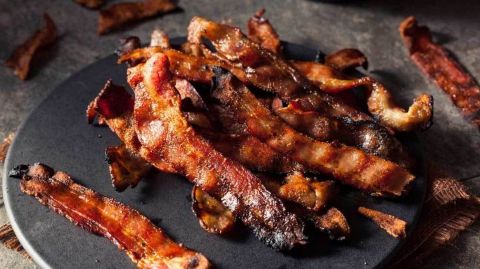
In this episode, they investigate whether we should really be giving up bacon and sausages, after new research suggested they're bad for us. The programme explores why eggs, for years demonised as unhealthy, are now firmly back in fashion and apparently now about as healthy as you can get. Could butter or dripping be next? Plus why white bread isn't necessarily as unhealthy as assumed.
2016 • Astronomy
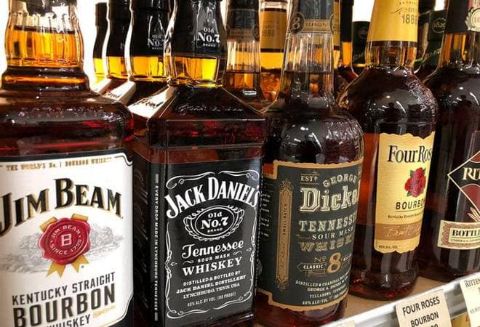
In this episode, they unpick the dramatic shift in advice on drinking alcohol. After warnings that there's no longer any safe limit, what's the truth on whether it's still ok to have a drink? And what about all the previous reports that suggest the occasional drink might actually be a good thing? The shocking secrets of how Britain snacks are revealed, but it seems the mid-afternoon energy slump that prompts millions to reach for treats may just be all in the mind. Also, the controversial 5:2 diet is put to the test. With the experts still divided, could regular fast days really be the key to losing weight?
2016 • Health
Nearly 40 million people are living with HIV. After decades of research and activism, how far have we come in finding a cure and battling the stigma?
S1E9 • History 101 • 2020 • Health
We've all heard that a glass of wine a day is healthy or that spinach is a good source of iron. But what is true and what is a myth?
2017 • Health
Is there any way to slow or even prevent the ravages of time? Veteran presenter Johnny Ball looks back over the 45 years that Horizon, and he, have been on air to find out what science has learned about how and why we grow old. Charting developments from macabre early claims of rejuvenation to the latest cutting-edge breakthroughs, Johnny discovers the sense of a personal mission that drives many scientists and asks whether we are really any closer to achieving the dream of immortality.
Many clinical trials target the nation's most acute health issues. With deaths from liver disease soaring by 40 per cent in a decade, more and more patients are waiting for vital liver transplants. There is a shortage of organ donors and many donated organs are rejected as only those in excellent condition are considered suitable for a transplant procedure. Surgeons Richard Laing and Thamara Perera are part of a team at QEHB trialling a revolutionary way to tackle this crisis, by maximising the number of donor organs that can be safely re-used. The film follows the trial every step of the way, as Richard receives a donor liver that would usually be rejected and tries to prove it is viable for transplant by rejuvenating and testing it on a perfusion machine. This machine sustains the liver by mimicking the supply of blood, oxygen and nutrients an organ receives inside a live, healthy human body. Once the donor liver has proved itself fit for transplant, the surgical team start to remove grandmother Connie O'Driscoll's severely diseased liver. Once the donor liver has been disconnected from the perfusion machine, they have just 20 minutes to place it in Connie's body and plumb it into the complex and delicate network of hepatic blood vessels.
S1E3 • Surgeons: At the Edge of Life • 2018 • Health
As a woman in New York City leans over a table, about to inhale a line of cocaine, she is unknowingly part of a $30 billion a year industry — an illegal empire governed by fear and violence, bribery and corruption, all spiraling out of control and turning Mexico and the southern border of the United States into one of the deadliest places on earth. In this probing, incisive investigation into the bloodstained path taken by cocaine we travel backwards from the end user in the U.S. all the way to the drug's source high in the South American mountains. We meet the dealers, traffickers, smugglers and farmers who together form its production and distribution chain, as well as the law enforcement agencies and individuals whose mission is to shut the deadly trade down. The cocaine industry is littered with unimaginable sums of cash and more than 35,000 murders in the past five years. Much of this violence occurs on the border between the United States and Mexico. This is just one aspect of the cocaine epidemic which is explored in the feature-length documentary Cocaine: History Between the Lines. This two-hour special goes inside the history of the second most used illicit drug in America. The human appetite for this narcotic goes all the way back to 3000 B.C., when South Americans chewed coca leaves thinking they were a gift from God. But it wasn't until 1855, when cocaine was first extracted from the coca leaf and used in powder form that its use spiked. Initially it was utilized as an anesthesia. Soon, famed psychologist Sigmund Freud touted it as an effective cure for depression and impotence. In 1886, John Pemberton, an Atlanta pharmacist, added it to his new soft drink: Coca Cola or Coke for short. In 1914, the drug was outlawed, but the damage had been done. The 70's ushered in another boost in the drug's use fueled in part by new drug cartels in South America. To combat cocaine's rise, the Reagan administration started the War on Drugs in the 80's. That hasn't stopped the proliferation of the drug in cities across America or with the cartels that continue to feed at the trough of this $30 billion dollar a year business. Cocaine use may have peaked decades ago, but it's never gone away. With the advent of crack cocaine in the 1980s, the trade became deadlier and more toxic than ever before. The high demand for the product has rendered more than 70% of Mexico under the control of the smuggling trade. American law enforcement agencies from Texas to California are fearful that this nefarious element will soon enter their country unchallenged. According to the officers interviewed in the film, border security is lax, and bureaucrats in Washington are doing little to remedy the crisis. For them, the discovery of a dismembered body – whether it be a trafficker, illegal immigrant or innocent bystander - has become a daily occurrence. This harsh reality is lost on most of the users themselves, who run the gamut from the hippest clubbers to the homeless population across America. Each user profiled in the film shares their experiences with the alluring white powder. Whether they use the drug recreationally or habitually, they have all witnessed the hold it can have on a life. From the personal to the political, Cocaine: History Between the Lines is a comprehensive account of a drug that has left much devastation in its wake.
2011 • Health
From the first row of planted crops, the practice of agriculture rendered man's hunter-gatherer lifestyles obsolete in favor of settled life and stable food supplies. This led to a skyrocketing population and enabled humans to develop skills outside of gathering the food needed to survive.
S1E2 • The History of Food • 2018 • Health