Sweet Fresh Water
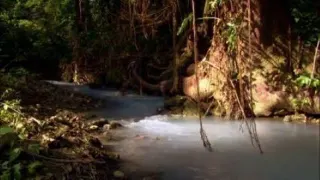
Attenborough describes the course the Amazon, starting high up in the Andes of Peru, whose streams flow into the great river. Young rivers are by…
Attenborough describes the course the Amazon, starting high up in the Andes of Peru, whose streams flow into the great river. Young rivers are by…
Starts in NASA's gravity research aircraft to illustrate the effect of weightlessness. There are surprisingly many plants whose seeds are, in effect…
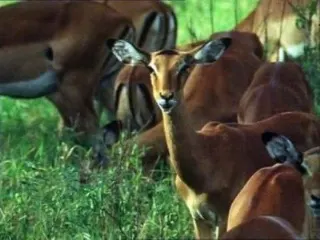
Starts in the Sahara, where the highest land temperatures have been recorded. Rock paintings depict creatures such as giraffes and antelopes…
Explores the grasses which are present all over the world. Grass sustains huge numbers of creatures the world over, particularly in the African…
Ascends a kapok in the South American tropical rainforest to observe "the greatest proliferation of life that you can find anywhere on the surface of…
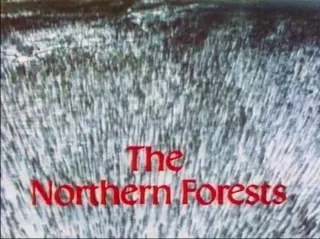
Begins in northern Norway, 500 kilometres north of the Arctic Circle. Here, there is only just enough light for the pine trees to survive, but it is…
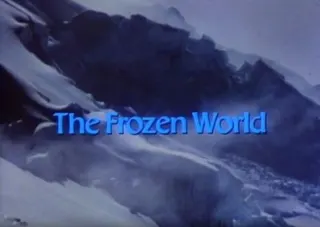
Describes the inhospitable habitats of snow and ice. Mount Rainier in America is an example of such a place: there is no vegetation, therefore no…
Visits the world's deepest valley: the Kali Gandaki river in the Himalayas. Its temperatures range from those of the tropics in its lower reaches to…
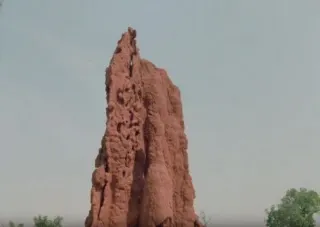
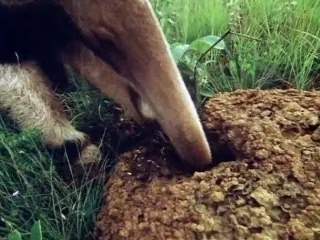
The inside of a termite mound proved especially challenging for Attenborough: it was so cramped that he could only face in one direction. He…
A look at the many and varied ways in which animals procreate in order to ensure that their genes are passed on to the next generation.
This edition looks at the various methods employed by species to attract a mate, including whales that sing "songs", hamsters that emit an odour, and…
From the love songs of fish to the flashes of millions of tiny beetles, Sir David Attenborough examines methods of communication used by animals.
From vampire bats to baboons, Sir David Attenborough investigates the importance of recognising friends and respecting the power of rivals throughout…
How many animals - including zebras, moose and stalk-eyes flies - assess their opponents' fighting prowess before making an attack that risks injury…
Examining some of the weird relationships that develop between species, from birds that relieve clients of hangers-on to hermit crabs that enlist…
How all animal architects aim to keep both the elements and intruders at bay through features that include defensive moats.
How animals ranging from albatrosses to ants can navigate themselves over long distances.
Life-and-death duels are fought daily in the wild: an orchid turns out to be a predator, killer whales ambush sea lions and chimps pursue colobus…
The search for food in the animal world. With leaves defended by poisons and seeds clad in thorns, animals fight back in very innovative ways.
For animals, there is no greater challenge than surviving the vulnerable first years of life. This episode demonstrates that nature's solutions are…
An examination of the diverse techniques employed by animals to disperse and protect offspring.
In Japan, one couple gets divorced every 2 minutes. Often, the wife initiates the split. Many women say their partners don't understand their…
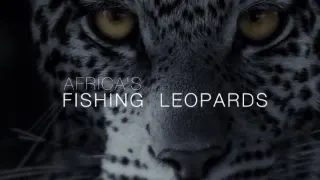
David Attenborough narrates the intimate story of a leopard mother and her two cubs. This very special family must survive in the wilds of Botswana…
The Galapagos Islands are home to some animals that washed up on the islands millions of years ago and have made adaptations. Penguins, iguanas…
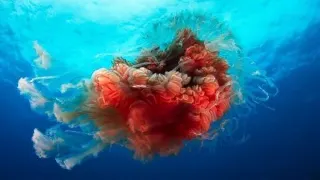
The big blue is the world's greatest wilderness, far from shore and many kilometres deep. It's a vast marine desert where there is little to eat and…
Life and Death explores the impact of Darwin’s ideas on our understanding of the meaning of extinction and the interconnections between all life on…
The second episode of Andrew Marr's exploration of Darwin explores the impact of Darwin’s ideas on society and politics. Darwin’s first port of call…
The first programme of Darwin's Dangerous Idea explores the impact of Darwin’s ideas on religion and morality. Andrew Marr discovers that an…
A group of world-renowned scientists are on a quest to uncover the secrets of the most significant day in our planet's history: the day that killed…
Dr Alice Roberts asks one of the great questions about our species: are we still evolving? There's no doubt that we're a product of millions of years…
The final episode deals with the evolution of the most widespread and dominant species on Earth: humans. The story begins in Africa, where, some 10…
The penultimate instalment investigates the primates, whose defining characteristics are forward-facing eyes for judging distance, and gripping hands…
This programme surveys mammal herbivores and their predators. The herbivores began to populate the forests when the dinosaurs disappeared, and many…
This episode continues the study of mammals, and particularly those whose young gestate inside their bodies. Attenborough asks why these have become…
This instalment is the first of several to concentrate on mammals. The platypus and the echidna are the only mammals that lay eggs (in much the same…
This programme focuses on birds. The feather is key to everything that is crucial about a bird: it is both its aerofoil and its insulator. The…
This episode is devoted to the evolution of reptiles. They are not as restricted as their amphibian ancestors, since they can survive in the hottest…
The next instalment describes the move from water to land. The fish that did so may have been forced to because of drought, or chose to in search of…
This episode details the relationship between flowers and insects. There are some one million classified species of insect, and two or three times as…
This instalment examines the earliest land vegetation and insects. The first plants, being devoid of stems, mainly comprised mosses and liverworts…
The next programme explores the various sea-living invertebrates. In Morocco, the limestones are 600 million years old, and contain many invertebrate…
The episode begins in the South American rainforest whose rich variety of life forms is used to illustrate the sheer number of different species…
Biology is undergoing a revolution that is radically changing our conception of evolution. Our genes don’t control everything: they can be influenced…
Transportation turned society inside out. Engines and animals powered the rise of civilization, driving humanity forward into the modern world.
Exploration has created and defined our modern world. Humanity's primal curiosity has sparked new inventions and revealed the mysteries of the…
This is the story of how humans built a world of their own design. From bone huts to skyscrapers, shelter inspired new technologies and societies.
War brings out the best and worst in humanity. It has revolutionized medicine, transportation and communication, and changed how we live and how we…
If knowledge is power, communication is the jet fuel, the delivery system, the gift we give each other that links the modern world. But it has a dark…