Edge of the Solar System
The only reason life on Earth is possible is because of our stable orbit around the Sun. Elsewhere in the Universe, orbits are chaotic, violent and…
The only reason life on Earth is possible is because of our stable orbit around the Sun. Elsewhere in the Universe, orbits are chaotic, violent and…
Believe it or not this is the first serious documentary on boredom. Director Albert Nerenberg (LAUGHOLOGY, STUPIDITY) asks why the subject of boredom…
Apple is the most valuable brand on the planet, making products that everyone wants - but how are its workers treated when the world isn't looking?…
This video is adapted from Johann Hari's New York Times best-selling book 'Chasing The Scream: The First and Last Days of the War on Drugs.' For more…
Imagine if you could plug your brain into a machine that would bring you ultimate pleasure for the rest of your life. The only catch? You have to…
Helen Czerski ventures beyond the visible spectrum in the final (and best) episode in this vibrant little series, showing how electromagnetic…
Early Earth was a canvas for the vast new palette of the colours of life, with the diversity of human skin tones telling the story of how humanity…
In the first episode, Helen seeks out the colours that turned planet Earth multicoloured. To investigate the essence of sunlight Helen travels to…
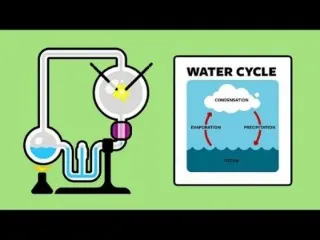
The Miller-Urey experiment was the first attempt to scientifically explore ideas about the origin of life. Stanley Miller simulated conditions…
If you were setting out to make a country rich, what kind of mindsets and ideas would be most likely to achieve your goals? We invent a country…
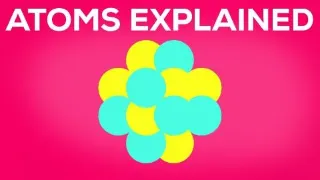
Atoms are very weird. Wrapping your head around exactly how weird, is close to impossible – how can you describe something that is SO removed from…
A look at the life and career of the technology business innovator and entrepreneur.
Filmmaker Alex Gibney investigates the fact that the 400 richest Americans control more wealth than the 150 million people in the bottom 50 percent…
There is a strange and mysterious world that surrounds us, a world largely hidden from our senses. The quest to explain the true nature of reality is…
This film tells the story of the last year of the war in Europe, from the D-Day landings in Normandy in June 1944 to the dual German surrender, first…
This film tells the story of the last year of the war in Europe, from the D-Day landings in Normandy in June 1944 to the dual German surrender, first…
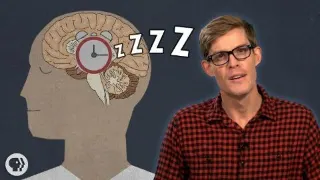
Why do we sleep? We spend a third of our lives in slumber, but science has yet to determine exactly why we have do it. Here’s a look at how sleep…
Our bodies are pretty incredible, here's why!
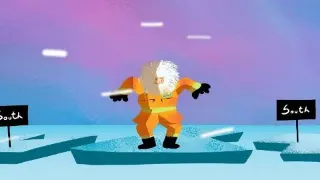
How can you tell the two poles apart? Where are the penguins? What about the bears? The Arctic pole is located in the Northern Hemisphere within the…
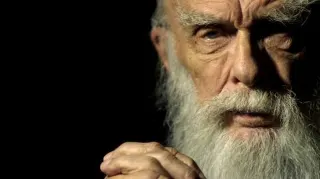
The life and career of the renowned stage magician turned scientific skeptic of the paranormal, James Randi.
What is it that makes things alive? What if we made robots that could sustain themselves? What if they could mine metals or recycle old robots…
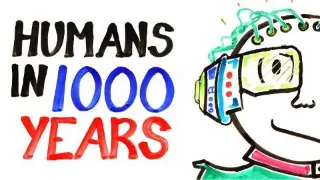
What will humanity look like in 1000 years? Watch as we cover some cutting-edge innovations happening today. Thanks to the National Geographic…
Horizon goes behind the scenes at Nasa to discover how it is preparing for its most ambitious and daring mission: to land men - and possibly women…
NOVA investigates a battery of high-tech telescopes that is joining the Hubble Space Telescope on its quest to unlock the secrets of our universe, a…
Never before has a film crew had such unrestricted access to the wonders of Saudi Arabia's seas. Desert Seas narrated by Sir David Attenborough tells…
We are so used to some things that we stopped wondering about them. Like light. What is light? Some kind of wavy thing, right? Kind of.
Change starts with one. It starts with you.
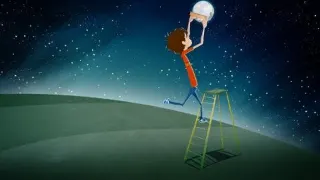
Have you noticed how the full moon looks bigger on the horizon than high overhead? Actually, the two images are exactly the same size -- so why do we…
A documentarian and a reporter travel to Hong Kong for the first of many meetings with Edward Snowden.
When you mix red and green, what do you get? White light is all of the colors, right? So, how do computer screens show you every wavelength of light?…
When faced with a big challenge where potential failure seems to lurk at every corner, you’ve probably heard the advice, “Be more confident!” But…
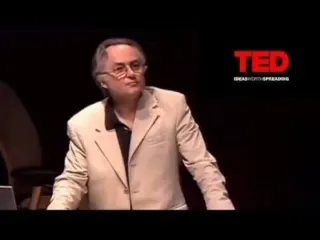
Richard Dawkins urges all atheists to openly state their position — and to fight the incursion of the church into politics and science. A fiery…
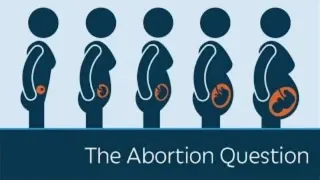
Is abortion right, or is it wrong? It's the big question that's lost in a societal debate that's mostly focused on legality. But, really, whether…
Was America's first billionaire, John D. Rockefeller, a greedy robber baron, a generous philanthropist, or both? And did the oil tycoon exploit…
In the US, 80% of girls have been on a diet by the time they're 10 years old. In this honest, raw talk, neuroscientist Sandra Aamodt uses her…
Without us noticing, modern life has been taken over. Algorithms run everything from search engines on the internet to satnavs and credit card data…
We’ve covered a lot of incredible stuff, but this week we’re talking about the weirdest objects in space: BLACK HOLES. Stellar mass black holes form…
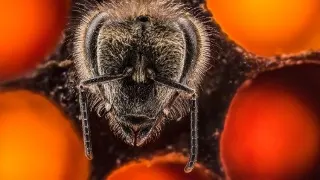
We’ve heard that bees are disappearing. But what is making bee colonies so vulnerable? Photographer Anand Varma raised bees in his backyard — in…
Work
Life and Death
Love
In the aftermath of a 8 – 20 solar mass star’s demise we find a weird little object known as a neutron star. Neutrons stars are incredibly dense…
Massive stars fuse heavier elements in their cores than lower mass stars. This leads to the creation of heavier elements up to iron. Iron robs…
Today Phil follows up last week’s look at the death of low mass stars with what comes next: a white dwarf. White dwarfs are incredibly hot and dense…
Today we are talking about the life -- and death -- of stars. Low mass stars live a long time, fusing all their hydrogen into helium over a trillion…
While Jupiter is nowhere near massive enough to initiate fusion in its core, there are even more massive objects out there that fall just short of…
Today Phil explains that YES, there are other planets out there and astonomers have a lot of methods for detecting them. Nearly 2000 have been found…
Today Phil’s explaining the stars and how they can be categorized using their spectra. Together with their distance, this provides a wealth of…